

 搜索
搜索
第139页
- 第1页
- 第2页
- 第3页
- 第4页
- 第5页
- 第6页
- 第7页
- 第8页
- 第9页
- 第10页
- 第11页
- 第12页
- 第13页
- 第14页
- 第15页
- 第16页
- 第17页
- 第18页
- 第19页
- 第20页
- 第21页
- 第22页
- 第23页
- 第24页
- 第25页
- 第26页
- 第27页
- 第28页
- 第29页
- 第30页
- 第31页
- 第32页
- 第33页
- 第34页
- 第35页
- 第36页
- 第37页
- 第38页
- 第39页
- 第40页
- 第41页
- 第42页
- 第43页
- 第44页
- 第45页
- 第46页
- 第47页
- 第48页
- 第49页
- 第50页
- 第51页
- 第52页
- 第53页
- 第54页
- 第55页
- 第56页
- 第57页
- 第58页
- 第59页
- 第60页
- 第61页
- 第62页
- 第63页
- 第64页
- 第65页
- 第66页
- 第67页
- 第68页
- 第69页
- 第70页
- 第71页
- 第72页
- 第73页
- 第74页
- 第75页
- 第76页
- 第77页
- 第78页
- 第79页
- 第80页
- 第81页
- 第82页
- 第83页
- 第84页
- 第85页
- 第86页
- 第87页
- 第88页
- 第89页
- 第90页
- 第91页
- 第92页
- 第93页
- 第94页
- 第95页
- 第96页
- 第97页
- 第98页
- 第99页
- 第100页
- 第101页
- 第102页
- 第103页
- 第104页
- 第105页
- 第106页
- 第107页
- 第108页
- 第109页
- 第110页
- 第111页
- 第112页
- 第113页
- 第114页
- 第115页
- 第116页
- 第117页
- 第118页
- 第119页
- 第120页
- 第121页
- 第122页
- 第123页
- 第124页
- 第125页
- 第126页
- 第127页
- 第128页
- 第129页
- 第130页
- 第131页
- 第132页
- 第133页
- 第134页
- 第135页
- 第136页
- 第137页
- 第138页
- 第139页
- 第140页
- 第141页
- 第142页
- 第143页
- 第144页
- 第145页
- 第146页
- 第147页
- 第148页
- 第149页
- 第150页
- 第151页
- 第152页
- 第153页
- 第154页
- 第155页
- 第156页
- 第157页
二、阅读理解
|题目|体裁|字数|难度|建议用时|实际用时|正确率|
|50/30/20 预算规则|说明文|230|★★★★|7 分钟|____分钟|____/3|
The 50/30/20 rule is a budget suggestion that includes dividing your money into three parts, 50% to needs, 30% to wants and 20% to savings. One of the advantages of the 50/30/20 budget rule is clear—manage your money properly.
50%—Needs Needs are the money that is necessary(必要的) for our daily life. They include houses, cars, food and so on.
30%—Wants Wants are often not so necessary, but this kind of money allows you to make your own budget.
20%—Savings Savings mean you should save some money because you may need it in the future.
The 50/30/20 Budget Rule Explained
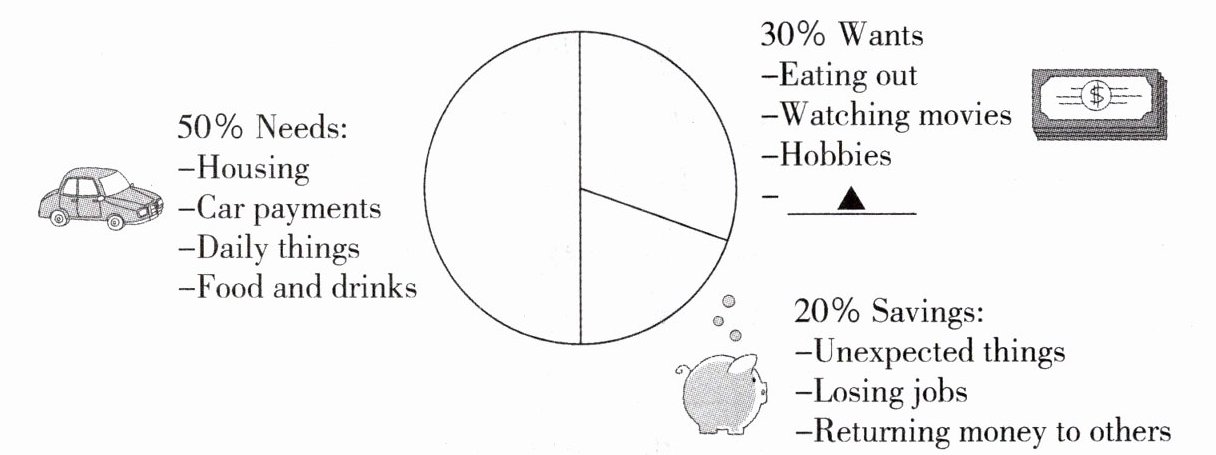
( )1. Which of the following can be put in " ▲ "?
A. Phone bill
B. Losing jobs
C. Travelling
D. Electricity(电)
( )2. Which of the following activities belongs to Needs according to the chart?
A. You ate out with your friends and watched a movie.
B. You donated(捐赠) some money to help kids in poor areas.
C. Your shirt was too short to wear, so you bought a new one.
D. You ordered a ticket to Zhang Jiajie National Forest Park.
( )3. A student gets 80 a month. If he strictly follows the 50/30/20 rule, how much should he save each month?
A. 16.
B. 20.
C. 24.
D. 40.
( )1. Which of the following can be put in " ▲ "?
( )2. Which of the following activities belongs to Needs according to the chart?
( )3. A student gets 80 a month. If he strictly follows the 50/30/20 rule, how much should he save each month?
|题目|体裁|字数|难度|建议用时|实际用时|正确率|
|50/30/20 预算规则|说明文|230|★★★★|7 分钟|____分钟|____/3|
The 50/30/20 rule is a budget suggestion that includes dividing your money into three parts, 50% to needs, 30% to wants and 20% to savings. One of the advantages of the 50/30/20 budget rule is clear—manage your money properly.
50%—Needs Needs are the money that is necessary(必要的) for our daily life. They include houses, cars, food and so on.
30%—Wants Wants are often not so necessary, but this kind of money allows you to make your own budget.
20%—Savings Savings mean you should save some money because you may need it in the future.
The 50/30/20 Budget Rule Explained
( )1. Which of the following can be put in " ▲ "?
A. Phone bill
B. Losing jobs
C. Travelling
D. Electricity(电)
( )2. Which of the following activities belongs to Needs according to the chart?
A. You ate out with your friends and watched a movie.
B. You donated(捐赠) some money to help kids in poor areas.
C. Your shirt was too short to wear, so you bought a new one.
D. You ordered a ticket to Zhang Jiajie National Forest Park.
( )3. A student gets 80 a month. If he strictly follows the 50/30/20 rule, how much should he save each month?
A. 16.
B. 20.
C. 24.
D. 40.
( )1. Which of the following can be put in " ▲ "?
C
( )2. Which of the following activities belongs to Needs according to the chart?
C
( )3. A student gets 80 a month. If he strictly follows the 50/30/20 rule, how much should he save each month?
A
答案:
1.C 2.C 3.A
查看更多完整答案,请扫码查看

