

 搜索
搜索
第189页
- 第1页
- 第2页
- 第3页
- 第4页
- 第5页
- 第6页
- 第7页
- 第8页
- 第9页
- 第10页
- 第11页
- 第12页
- 第13页
- 第14页
- 第15页
- 第16页
- 第17页
- 第18页
- 第19页
- 第20页
- 第21页
- 第22页
- 第23页
- 第24页
- 第25页
- 第26页
- 第27页
- 第28页
- 第29页
- 第30页
- 第31页
- 第32页
- 第33页
- 第34页
- 第35页
- 第36页
- 第37页
- 第38页
- 第39页
- 第40页
- 第41页
- 第42页
- 第43页
- 第44页
- 第45页
- 第46页
- 第47页
- 第48页
- 第49页
- 第50页
- 第51页
- 第52页
- 第53页
- 第54页
- 第55页
- 第56页
- 第57页
- 第58页
- 第59页
- 第60页
- 第61页
- 第62页
- 第63页
- 第64页
- 第65页
- 第66页
- 第67页
- 第68页
- 第69页
- 第70页
- 第71页
- 第72页
- 第73页
- 第74页
- 第75页
- 第76页
- 第77页
- 第78页
- 第79页
- 第80页
- 第81页
- 第82页
- 第83页
- 第84页
- 第85页
- 第86页
- 第87页
- 第88页
- 第89页
- 第90页
- 第91页
- 第92页
- 第93页
- 第94页
- 第95页
- 第96页
- 第97页
- 第98页
- 第99页
- 第100页
- 第101页
- 第102页
- 第103页
- 第104页
- 第105页
- 第106页
- 第107页
- 第108页
- 第109页
- 第110页
- 第111页
- 第112页
- 第113页
- 第114页
- 第115页
- 第116页
- 第117页
- 第118页
- 第119页
- 第120页
- 第121页
- 第122页
- 第123页
- 第124页
- 第125页
- 第126页
- 第127页
- 第128页
- 第129页
- 第130页
- 第131页
- 第132页
- 第133页
- 第134页
- 第135页
- 第136页
- 第137页
- 第138页
- 第139页
- 第140页
- 第141页
- 第142页
- 第143页
- 第144页
- 第145页
- 第146页
- 第147页
- 第148页
- 第149页
- 第150页
- 第151页
- 第152页
- 第153页
- 第154页
- 第155页
- 第156页
- 第157页
- 第158页
- 第159页
- 第160页
- 第161页
- 第162页
- 第163页
- 第164页
- 第165页
- 第166页
- 第167页
- 第168页
- 第169页
- 第170页
- 第171页
- 第172页
- 第173页
- 第174页
- 第175页
- 第176页
- 第177页
- 第178页
- 第179页
- 第180页
- 第181页
- 第182页
- 第183页
- 第184页
- 第185页
- 第186页
- 第187页
- 第188页
- 第189页
- 第190页
- 第191页
- 第192页
- 第193页
- 第194页
- 第195页
- 第196页
- 第197页
- 第198页
- 第199页
- 第200页
1. 你有多少零花钱?你多久存一次?
2. 在春节的时候,我们有时会从祖父母或亲戚那里得到一些红包。
3. 所以我们应该学习如何明智地使用我们的压岁钱。
4. 我们可以在每年年初做一个预算。
5. 我们可以用一些钱来帮助有需要的人。
6. 存钱以备不时之需也很重要。
How much pocket money do you have? How often do you save it?
2. 在春节的时候,我们有时会从祖父母或亲戚那里得到一些红包。
Sometimes,we get red packets from grandparents or relatives at the Spring Festival.
3. 所以我们应该学习如何明智地使用我们的压岁钱。
So we should learn how to use our lucky money wisely.
4. 我们可以在每年年初做一个预算。
We can make a budget at the beginning of each year.
5. 我们可以用一些钱来帮助有需要的人。
We can use some money to help people in need.
6. 存钱以备不时之需也很重要。
It's also important to save for a rainy day.
答案:
1. How much pocket money do you have? How often do you save it? 2. Sometimes,we get red packets from grandparents or relatives at the Spring Festival. 3. So we should learn how to use our lucky money wisely. 4. We can make a budget at the beginning of each year. 5. We can use some money to help people in need. 6. It's also important to save for a rainy day.
Ⅴ.阅读理解
跨学科 生物 A food chain is a way to show the relationships(关系) among living things in nature. It shows the path(路径) the energy takes from the sun through producers and consumers to decomposers. Everything needs energy to live on.
A producer is a living thing that makes energy from the sun. It absorbs sunlight, turns it into energy and keeps it. A perfect example of a producer is a vegetable or fruit. These plants take in sunlight through their green leaves, produce energy, and keep it in the other parts of the plant, such as its fruit and flowers—what is most useful to consumers.
A consumer is a living thing in the food chain that eats producers or other consumers for energy. These consumers can be insects, animals and humans. Insects, like grasshoppers (蚱蜢), eat producers and take in their energy. Consumers can also eat other consumers. For example, consumers like lions and tigers often eat other animals below them in the food chain. In this way, energy can be passed to other consumers.
A decomposer is a living thing in the food chain that gets its energy from both consumers and producers by eating dead plants and animals. Ants and some other insects are good examples of decomposers. These living things eat dead plants and animals, take in the energy to live on and put new substances(物质) into the earth. Plants use the substances to make energy of their own to start the cycle again.
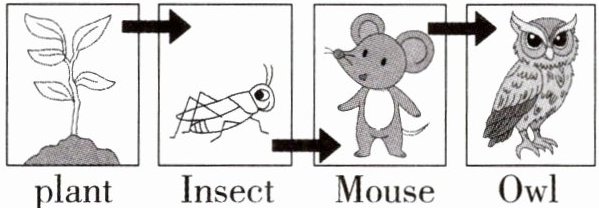
The food chain includes all living things on the earth and is difficult to understand. We can make an easy picture of the food chain by choosing just one group of living things. Here is an example of a simple(简单的) food chain.
1. What does the underlined word “absorb” mean in Paragraph 2?
A. Make.
B. Catch.
C. Eat.
D. Save.
2. Which of the following living things may be a decomposer?
A. Butterflies.
B. Bamboos.
C. Bees.
D. Flies.
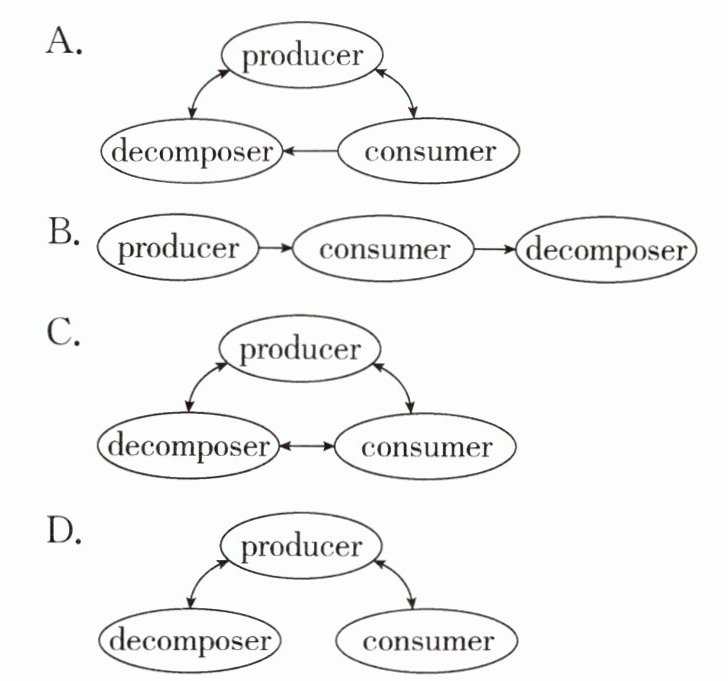
3. 新考法 图示理解 Which of the following picture shows how the food chain works?
A.
B.
C.
D.
4. What can we learn from the passage?
A. Consumers are animals living on meat.
B. Producers can only live on the sunlight.
C. Decomposers are dangerous to other lives.
D. Every living thing is important to the earth.
跨学科 生物 A food chain is a way to show the relationships(关系) among living things in nature. It shows the path(路径) the energy takes from the sun through producers and consumers to decomposers. Everything needs energy to live on.
A producer is a living thing that makes energy from the sun. It absorbs sunlight, turns it into energy and keeps it. A perfect example of a producer is a vegetable or fruit. These plants take in sunlight through their green leaves, produce energy, and keep it in the other parts of the plant, such as its fruit and flowers—what is most useful to consumers.
A consumer is a living thing in the food chain that eats producers or other consumers for energy. These consumers can be insects, animals and humans. Insects, like grasshoppers (蚱蜢), eat producers and take in their energy. Consumers can also eat other consumers. For example, consumers like lions and tigers often eat other animals below them in the food chain. In this way, energy can be passed to other consumers.
A decomposer is a living thing in the food chain that gets its energy from both consumers and producers by eating dead plants and animals. Ants and some other insects are good examples of decomposers. These living things eat dead plants and animals, take in the energy to live on and put new substances(物质) into the earth. Plants use the substances to make energy of their own to start the cycle again.
The food chain includes all living things on the earth and is difficult to understand. We can make an easy picture of the food chain by choosing just one group of living things. Here is an example of a simple(简单的) food chain.
1. What does the underlined word “absorb” mean in Paragraph 2?
A. Make.
B. Catch.
C. Eat.
D. Save.
2. Which of the following living things may be a decomposer?
A. Butterflies.
B. Bamboos.
C. Bees.
D. Flies.
3. 新考法 图示理解 Which of the following picture shows how the food chain works?
A.
B.
C.
D.
4. What can we learn from the passage?
A. Consumers are animals living on meat.
B. Producers can only live on the sunlight.
C. Decomposers are dangerous to other lives.
D. Every living thing is important to the earth.
答案:
Ⅴ. 1—4 BDAD
查看更多完整答案,请扫码查看

