

 搜索
搜索
第136页
- 第1页
- 第2页
- 第3页
- 第4页
- 第5页
- 第6页
- 第7页
- 第8页
- 第9页
- 第10页
- 第11页
- 第12页
- 第13页
- 第14页
- 第15页
- 第16页
- 第17页
- 第18页
- 第19页
- 第20页
- 第21页
- 第22页
- 第23页
- 第24页
- 第25页
- 第26页
- 第27页
- 第28页
- 第29页
- 第30页
- 第31页
- 第32页
- 第33页
- 第34页
- 第35页
- 第36页
- 第37页
- 第38页
- 第39页
- 第40页
- 第41页
- 第42页
- 第43页
- 第44页
- 第45页
- 第46页
- 第47页
- 第48页
- 第49页
- 第50页
- 第51页
- 第52页
- 第53页
- 第54页
- 第55页
- 第56页
- 第57页
- 第58页
- 第59页
- 第60页
- 第61页
- 第62页
- 第63页
- 第64页
- 第65页
- 第66页
- 第67页
- 第68页
- 第69页
- 第70页
- 第71页
- 第72页
- 第73页
- 第74页
- 第75页
- 第76页
- 第77页
- 第78页
- 第79页
- 第80页
- 第81页
- 第82页
- 第83页
- 第84页
- 第85页
- 第86页
- 第87页
- 第88页
- 第89页
- 第90页
- 第91页
- 第92页
- 第93页
- 第94页
- 第95页
- 第96页
- 第97页
- 第98页
- 第99页
- 第100页
- 第101页
- 第102页
- 第103页
- 第104页
- 第105页
- 第106页
- 第107页
- 第108页
- 第109页
- 第110页
- 第111页
- 第112页
- 第113页
- 第114页
- 第115页
- 第116页
- 第117页
- 第118页
- 第119页
- 第120页
- 第121页
- 第122页
- 第123页
- 第124页
- 第125页
- 第126页
- 第127页
- 第128页
- 第129页
- 第130页
- 第131页
- 第132页
- 第133页
- 第134页
- 第135页
- 第136页
- 第137页
- 第138页
- 第139页
- 第140页
- 第141页
- 第142页
- 第143页
- 第144页
- 第145页
- 第146页
- 第147页
- 第148页
- 第149页
- 第150页
- 第151页
- 第152页
- 第153页
- 第154页
- 第155页
- 第156页
- 第157页
- 第158页
- 第159页
- 第160页
- 第161页
- 第162页
- 第163页
- 第164页
- 第165页
- 第166页
- 第167页
- 第168页
- 第169页
- 第170页
- 第171页
- 第172页
- 第173页
- 第174页
- 第175页
- 第176页
- 第177页
- 第178页
- 第179页
- 第180页
- 第181页
- 第182页
- 第183页
- 第184页
- 第185页
- 第186页
- 第187页
- 第188页
- 第189页
- 第190页
- 第191页
- 第192页
- 第193页
- 第194页
- 第195页
- 第196页
- 第197页
- 第198页
- 第199页
- 第200页
Ⅰ.根据句意及汉语、首字母或音标提示写出单词
1. When I got to the classroom, the
2. —How many
3. How many grams of soybeans do we need to make
4. In Chinese food culture,
5. —Oh, what's wrong with your face? —It's not my face but my
6. —Anna, hurry up, or we will be late. —Oh, it's just 7:00 now. We have enough time. There is no
7. There isn't too much
8. The project is harder
1. When I got to the classroom, the
whole
(整个的) class were arguing about where to spend the coming weekend.2. —How many
pieces
(张) of paper do you need? One or two? —Two, please.3. How many grams of soybeans do we need to make
tofu
(豆腐)?4. In Chinese food culture,
mutton
(羊肉) is seen as a healthy food to eat in winter.5. —Oh, what's wrong with your face? —It's not my face but my
teeth
that hurt. I will see a dentist later.6. —Anna, hurry up, or we will be late. —Oh, it's just 7:00 now. We have enough time. There is no
need
to rush.7. There isn't too much
sugar
(/'ʃʊgə(r)/) in Chinese food.8. The project is harder
than
(/ðæn/) I thought. I need more time to finish it.
答案:
Ⅰ. 1. whole 2. pieces 3. tofu 4. mutton 5. teeth 6. need 7. sugar 8. than
Ⅱ.用括号中所给单词的正确形式填空
1. Eating
2. He shouldn't go to school
3. The boy was so busy
4. —Do you want to do your English
5. You should eat more fruit and vegetables
1. Eating
less
(little) meat and more
(many) vegetables is good for our health.2. He shouldn't go to school
without
(with) having breakfast that often.3. The boy was so busy
planning
(plan) how to go home that he didn't hear what the teacher said.4. —Do you want to do your English
exercises
(exercise) now? —No. I have been sitting for a long time. I want to do some exercise
(exercise) first.5. You should eat more fruit and vegetables
to keep
(keep) fit.
答案:
Ⅱ. 1. less; more 2. without 3. planning 4. exercises; exercise 5. to keep
1. One hot topic at this year's meetings is “new productive forces(新质生产力)”. It means using modern and better ways ____ the country grow.
A.help
B.helping
C.to help
D.helps
C
A.help
B.helping
C.to help
D.helps
答案:
1. C
2. There are thirty ____ and ____ students in our school.
A.women teachers; two thousands
B.women teachers; thousands of
C.woman teachers; two thousand
D.woman teachers; thousand of
B
A.women teachers; two thousands
B.women teachers; thousands of
C.woman teachers; two thousand
D.woman teachers; thousand of
答案:
2. B
3. —Jim, you look sleepy. What's wrong? —I
A.looked up
B.ended up
C.stayed up
D.took up
C
to write a report last night.A.looked up
B.ended up
C.stayed up
D.took up
答案:
3. C
4. As junior school students, we should
A.say thanks to
B.say sorry to
C.say hello to
D.say no to
D
smoking and drinking.A.say thanks to
B.say sorry to
C.say hello to
D.say no to
答案:
4. D
5. —Why are there so ____ people in the supermarket near our school? —Because they want to buy ____ cheap bread there.
A.many; much
B.many; many
C.much; much
D.much; many
A
A.many; much
B.many; many
C.much; much
D.much; many
答案:
5. A
6. —____ important for him ____ a walk after dinner? —Yes. He needs to do something to stay healthy.
A.Is it; to take
B.Is that; to take
C.Is that; takes
D.Is it; taking
A
A.Is it; to take
B.Is that; to take
C.Is that; takes
D.Is it; taking
答案:
6. A
Ⅳ.阅读理解
新素材AI与远程医疗①Can you imagine a doctor performing a surgery (手术) on a patient thousands of kilometres away? It seems to only happen in science fiction. However, a recent surgery done by doctors in Chengdu has shown the possibility in real life. Using a robotic technology, the doctors saved a patient in Lhasa. With the development of AI-powered remote(远程的) surgery, modern healthcare has changed in a big way.
②AI played an important part in this surgery. By studying tons of medical data(数据), AI helps doctors plan the surgery, predict problems that could happen, and find the solutions.
③During the surgery, AI also tells the doctors the patient's necessary information, like heart rate, blood pressure and oxygen level. If anything of the patient goes wrong, it can warn the medical team and suggest changes to the surgery plan.
④Another key role in this surgery was supercomputing technology. Remote surgeries need fast data transmission (传送), as even small delays (延迟) can be dangerous. Supercomputing can quickly deal with a lot of data, making sure that the surgery pictures are clear and that the doctors' orders are followed at once. The two-way network delay in this surgery was only 40 milliseconds, thanks to powerful supercomputers.
⑤The robot used in this surgery does an excellent job. It has one arm and one hole, which makes the cut smaller, making less pain and speeding up the process for the patient to get better. It also increases the chances of a successful surgery and lowers the risk of accidents.
⑥This kind of surgery is a huge excitement, especially for people in remote areas. It means that patients don't have to travel far for good medical care, saving time and being treated in time.
⑦And for places with fewer doctors, this kind of surgery also brings good news as doctors from bigger cities can help with surgeries and train local doctors. This kind of surgery is important for improving healthcare everywhere.
1. 新考法写作手法 How does the writer lead into the AI-powered remote surgery?
A. By giving an example. B. By telling a story. C. By giving reasons. D. By listing numbers.
2. 新考法创新设问 Which of the following questions is answered in Paragraph 4?
A. Where was the AI-powered remote surgery performed? B. Why does the surgery need the help of supercomputers? C. When is the best time for the supercomputers to deal with the data? D. How are the normal computers different from the supercomputers?
3. What can we infer about AI-powered remote surgery from the passage?
A. No matter how far the place is, this kind of surgery can reach. B. AI can warn the doctors if anything goes wrong with the patient. C. The doctors in Lhasa might improve their skills through this kind of surgery. D. The patient in Lhasa may get better a little slower through this kind of surgery.
4. 新考法篇章结构 Which of the following shows the structure of this passage?
A.
①
②③ ④⑤ ⑥
⑦
B.
①
② ③ ④⑤
⑥⑦
C.
①
② ③④ ⑤⑥
⑦
D.
①
②③ ④ ⑤
⑥⑦
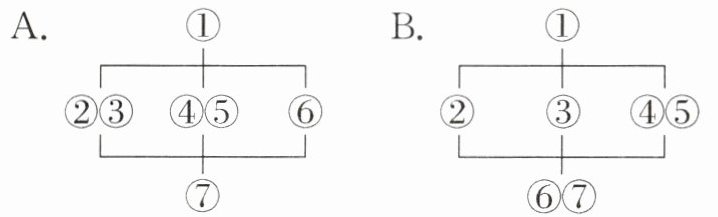
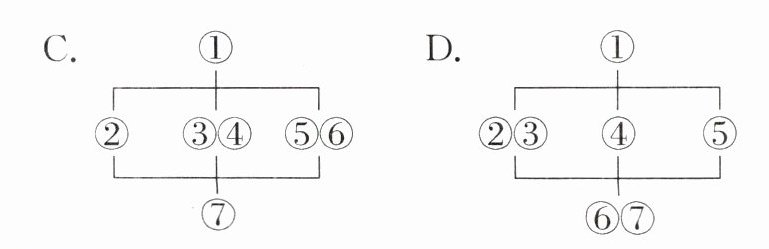
新素材AI与远程医疗①Can you imagine a doctor performing a surgery (手术) on a patient thousands of kilometres away? It seems to only happen in science fiction. However, a recent surgery done by doctors in Chengdu has shown the possibility in real life. Using a robotic technology, the doctors saved a patient in Lhasa. With the development of AI-powered remote(远程的) surgery, modern healthcare has changed in a big way.
②AI played an important part in this surgery. By studying tons of medical data(数据), AI helps doctors plan the surgery, predict problems that could happen, and find the solutions.
③During the surgery, AI also tells the doctors the patient's necessary information, like heart rate, blood pressure and oxygen level. If anything of the patient goes wrong, it can warn the medical team and suggest changes to the surgery plan.
④Another key role in this surgery was supercomputing technology. Remote surgeries need fast data transmission (传送), as even small delays (延迟) can be dangerous. Supercomputing can quickly deal with a lot of data, making sure that the surgery pictures are clear and that the doctors' orders are followed at once. The two-way network delay in this surgery was only 40 milliseconds, thanks to powerful supercomputers.
⑤The robot used in this surgery does an excellent job. It has one arm and one hole, which makes the cut smaller, making less pain and speeding up the process for the patient to get better. It also increases the chances of a successful surgery and lowers the risk of accidents.
⑥This kind of surgery is a huge excitement, especially for people in remote areas. It means that patients don't have to travel far for good medical care, saving time and being treated in time.
⑦And for places with fewer doctors, this kind of surgery also brings good news as doctors from bigger cities can help with surgeries and train local doctors. This kind of surgery is important for improving healthcare everywhere.
1. 新考法写作手法 How does the writer lead into the AI-powered remote surgery?
A. By giving an example. B. By telling a story. C. By giving reasons. D. By listing numbers.
2. 新考法创新设问 Which of the following questions is answered in Paragraph 4?
A. Where was the AI-powered remote surgery performed? B. Why does the surgery need the help of supercomputers? C. When is the best time for the supercomputers to deal with the data? D. How are the normal computers different from the supercomputers?
3. What can we infer about AI-powered remote surgery from the passage?
A. No matter how far the place is, this kind of surgery can reach. B. AI can warn the doctors if anything goes wrong with the patient. C. The doctors in Lhasa might improve their skills through this kind of surgery. D. The patient in Lhasa may get better a little slower through this kind of surgery.
4. 新考法篇章结构 Which of the following shows the structure of this passage?
A.
①
②③ ④⑤ ⑥
⑦
B.
①
② ③ ④⑤
⑥⑦
C.
①
② ③④ ⑤⑥
⑦
D.
①
②③ ④ ⑤
⑥⑦
答案:
Ⅳ. 1-4 ABCD
查看更多完整答案,请扫码查看

