

 搜索
搜索
第126页
- 第1页
- 第2页
- 第3页
- 第4页
- 第5页
- 第6页
- 第7页
- 第8页
- 第9页
- 第10页
- 第11页
- 第12页
- 第13页
- 第14页
- 第15页
- 第16页
- 第17页
- 第18页
- 第19页
- 第20页
- 第21页
- 第22页
- 第23页
- 第24页
- 第25页
- 第26页
- 第27页
- 第28页
- 第29页
- 第30页
- 第31页
- 第32页
- 第33页
- 第34页
- 第35页
- 第36页
- 第37页
- 第38页
- 第39页
- 第40页
- 第41页
- 第42页
- 第43页
- 第44页
- 第45页
- 第46页
- 第47页
- 第48页
- 第49页
- 第50页
- 第51页
- 第52页
- 第53页
- 第54页
- 第55页
- 第56页
- 第57页
- 第58页
- 第59页
- 第60页
- 第61页
- 第62页
- 第63页
- 第64页
- 第65页
- 第66页
- 第67页
- 第68页
- 第69页
- 第70页
- 第71页
- 第72页
- 第73页
- 第74页
- 第75页
- 第76页
- 第77页
- 第78页
- 第79页
- 第80页
- 第81页
- 第82页
- 第83页
- 第84页
- 第85页
- 第86页
- 第87页
- 第88页
- 第89页
- 第90页
- 第91页
- 第92页
- 第93页
- 第94页
- 第95页
- 第96页
- 第97页
- 第98页
- 第99页
- 第100页
- 第101页
- 第102页
- 第103页
- 第104页
- 第105页
- 第106页
- 第107页
- 第108页
- 第109页
- 第110页
- 第111页
- 第112页
- 第113页
- 第114页
- 第115页
- 第116页
- 第117页
- 第118页
- 第119页
- 第120页
- 第121页
- 第122页
- 第123页
- 第124页
- 第125页
- 第126页
- 第127页
- 第128页
- 第129页
- 第130页
- 第131页
- 第132页
- 第133页
- 第134页
- 第135页
- 第136页
- 第137页
- 第138页
- 第139页
- 第140页
- 第141页
- 第142页
- 第143页
- 第144页
- 第145页
- 第146页
- 第147页
- 第148页
- 第149页
- 第150页
- 第151页
- 第152页
- 第153页
- 第154页
- 第155页
- 第156页
- 第157页
- 第158页
- 第159页
- 第160页
- 第161页
- 第162页
- 第163页
- 第164页
- 第165页
- 第166页
- 第167页
- 第168页
- 第169页
- 第170页
- 第171页
- 第172页
- 第173页
- 第174页
- 第175页
- 第176页
- 第177页
- 第178页
- 第179页
- 第180页
- 第181页
- 第182页
- 第183页
- 第184页
- 第185页
- 第186页
- 第187页
- 第188页
- 第189页
- 第190页
- 第191页
- 第192页
- 第193页
- 第194页
- 第195页
- 第196页
- 第197页
- 第198页
- 第199页
- 第200页
9. Nanjing is an internet-famous city now. Most places of interest and shopping malls are ____ people across the country on holidays.
A.fill with
B.filled of
C.full of
D.full with
C
A.fill with
B.filled of
C.full of
D.full with
答案:
9. C
10. —Can you give me some advice on how to lose weight?
—Eat ____ meat and ____ cakes.
A.less; fewer
B.fewer; less
C.less; less
D.fewer; fewer
—Eat ____ meat and ____ cakes.
A
A.less; fewer
B.fewer; less
C.less; less
D.fewer; fewer
答案:
10. A
11. —Do you know
—We can try not to waste any energy and resources.
A.why can we live
B.how can we live
C.why we can live
D.how we can live
D
a green life?—We can try not to waste any energy and resources.
A.why can we live
B.how can we live
C.why we can live
D.how we can live
答案:
11. D
Ⅳ.句子翻译
1. 她母亲每天在广场上跳两个小时舞。
Her mother
2. 晚餐我喜欢吃豆腐和羊肉。
3. 我爱吃甜食,所以我不能拒绝糖果。
I
4. 我每天睡十个小时,所以我总是精力充沛。
I
5. ——为什么健康的食物对基蒂很重要?
——因为她想保持健康。
—Why
—Because she wants
6. 我认为每晚熬夜不好。
I think
7. 外面正在刮大风,你最好待在家里。
The wind is blowing strongly outside, so you'd better
1. 她母亲每天在广场上跳两个小时舞。
Her mother
dances for two hours
in the square every day.2. 晚餐我喜欢吃豆腐和羊肉。
For dinner
, I like tofu and mutton
.3. 我爱吃甜食,所以我不能拒绝糖果。
I
have a sweet tooth
so I can't say no to sweets
.4. 我每天睡十个小时,所以我总是精力充沛。
I
get ten hours of sleep/sleep for ten hours
every day, so I am always full of energy
.5. ——为什么健康的食物对基蒂很重要?
——因为她想保持健康。
—Why
is healthy food very important for
Kitty?—Because she wants
to keep healthy/fit
.6. 我认为每晚熬夜不好。
I think
it's bad to stay up late
every night.7. 外面正在刮大风,你最好待在家里。
The wind is blowing strongly outside, so you'd better
stay at home
.
答案:
Ⅳ. 1. dances for two hours 2. For dinner; tofu and mutton 3. have a sweet tooth; say no to sweets 4. get ten hours of sleep/sleep for ten hours; full of energy 5. is healthy food very important for; to keep healthy/fit 6. it's bad to stay up late 7. stay at home
Ⅴ.阅读理解
Do you ever feel you can't think clearly after playing on the phones for too long? If you do, welcome to the world of “brain rot (脑腐)”!
The phrase first appeared in the book Walden in 1854, but now it specifically refers to what happens when someone spends too much time online. The frequency (频率) of people using the phrase keeps growing these years. In 2024, the Oxford even named it Word of the Year.
So what will happen if you have brain rot? Well, sometimes it seems like your brain is a blank for a while. For example, you start forgetting things that happened just now. You might find yourself walking into a room and forgetting why you're there. Looking for a thing that is just in your hand is another common symptom.
The bad sides go beyond those funny things. Brain rot can cause the loss of critical (批判的) thinking. Your emotions may experience ups and downs more often.
But don't be afraid! Solving the problem doesn't need any expensive medicine. Start by cutting down your screen time. Remember, living without your smartphone for a few hours won't be too hard. Try to take a break to enjoy the real world. You can join in physical activities, read real books (not the videos that can let you read one in 3 minutes), and talk to real persons face-to-face.
Just like a garden needs care to grow healthy plants, your brain needs good habits to stay strong. Take care of it, so that more beautiful flowers of creativity and happiness can bloom (盛开) inside!
1. 跨学科 数学 Which of the following shows the use of “brain rot” these years? (“f” means the frequency and “t” means time)
A. f↑
... 2022 2023 2024 t
B. f↑
... 2022 2023 2024 t
C. f↑
... 2022 2023 2024 t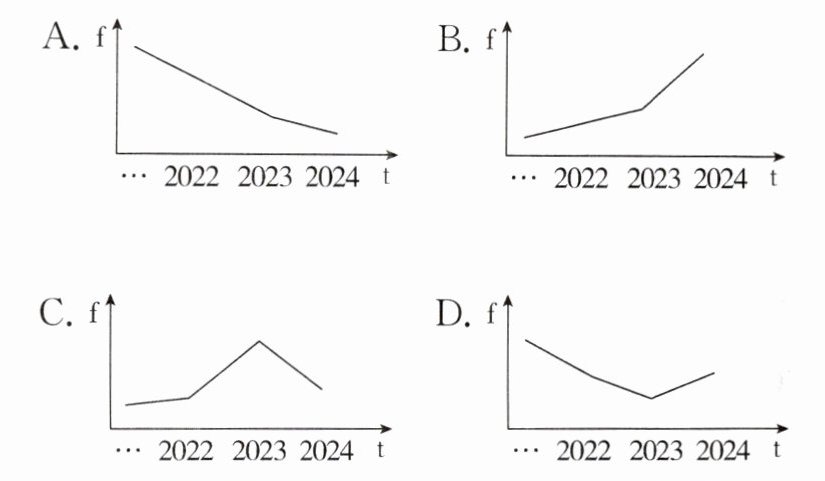
2. 新考法 创新设问 What does the underlined word “blank” mean in the passage?
a. [adj.] Usually used in go blank. It means something in your head disappeared for no reason.
e.g. When I saw the beautiful girl, my mind just went blank.
b. [v.] If you blank, you can't remember what you had in mind before.
e.g. I just blanked in the exam.
c. [n.] A space without words or pictures on a piece of paper.
e.g. Please fill in the blank after reading the passage.
d. [n.] Used to say a situation when you forget something.
e.g. I tried to think of his name but my mind was a blank.
A. a.
B. b.
C. c.
D. d.
3. What can we learn from the passage?
A. Brain rot appeared in 2024 as a new phrase.
B. Enjoying the real world is good for the brain.
C. It's very hard to solve the problem of brain rot.
D. Reading books in 3 minutes practises your brain.
4. What's the writer's purpose (目的) of writing this passage?
A. To tell people never to use the internet again.
B. To advise people to take care of their brain.
C. To share some popular words of the year 2024.
D. To explain the reasons why brain rot happens.
Do you ever feel you can't think clearly after playing on the phones for too long? If you do, welcome to the world of “brain rot (脑腐)”!
The phrase first appeared in the book Walden in 1854, but now it specifically refers to what happens when someone spends too much time online. The frequency (频率) of people using the phrase keeps growing these years. In 2024, the Oxford even named it Word of the Year.
So what will happen if you have brain rot? Well, sometimes it seems like your brain is a blank for a while. For example, you start forgetting things that happened just now. You might find yourself walking into a room and forgetting why you're there. Looking for a thing that is just in your hand is another common symptom.
The bad sides go beyond those funny things. Brain rot can cause the loss of critical (批判的) thinking. Your emotions may experience ups and downs more often.
But don't be afraid! Solving the problem doesn't need any expensive medicine. Start by cutting down your screen time. Remember, living without your smartphone for a few hours won't be too hard. Try to take a break to enjoy the real world. You can join in physical activities, read real books (not the videos that can let you read one in 3 minutes), and talk to real persons face-to-face.
Just like a garden needs care to grow healthy plants, your brain needs good habits to stay strong. Take care of it, so that more beautiful flowers of creativity and happiness can bloom (盛开) inside!
1. 跨学科 数学 Which of the following shows the use of “brain rot” these years? (“f” means the frequency and “t” means time)
A. f↑
... 2022 2023 2024 t
B. f↑
... 2022 2023 2024 t
C. f↑
... 2022 2023 2024 t
2. 新考法 创新设问 What does the underlined word “blank” mean in the passage?
a. [adj.] Usually used in go blank. It means something in your head disappeared for no reason.
e.g. When I saw the beautiful girl, my mind just went blank.
b. [v.] If you blank, you can't remember what you had in mind before.
e.g. I just blanked in the exam.
c. [n.] A space without words or pictures on a piece of paper.
e.g. Please fill in the blank after reading the passage.
d. [n.] Used to say a situation when you forget something.
e.g. I tried to think of his name but my mind was a blank.
A. a.
B. b.
C. c.
D. d.
3. What can we learn from the passage?
A. Brain rot appeared in 2024 as a new phrase.
B. Enjoying the real world is good for the brain.
C. It's very hard to solve the problem of brain rot.
D. Reading books in 3 minutes practises your brain.
4. What's the writer's purpose (目的) of writing this passage?
A. To tell people never to use the internet again.
B. To advise people to take care of their brain.
C. To share some popular words of the year 2024.
D. To explain the reasons why brain rot happens.
答案:
Ⅴ. 1-4 BDBB
查看更多完整答案,请扫码查看

