

 搜索
搜索
第12页
- 第1页
- 第2页
- 第3页
- 第4页
- 第5页
- 第6页
- 第7页
- 第8页
- 第9页
- 第10页
- 第11页
- 第12页
- 第13页
- 第14页
- 第15页
- 第16页
- 第17页
- 第18页
- 第19页
- 第20页
- 第21页
- 第22页
- 第23页
- 第24页
- 第25页
- 第26页
- 第27页
- 第28页
- 第29页
- 第30页
- 第31页
- 第32页
- 第33页
- 第34页
- 第35页
- 第36页
- 第37页
- 第38页
- 第39页
- 第40页
- 第41页
- 第42页
- 第43页
- 第44页
- 第45页
- 第46页
- 第47页
- 第48页
- 第49页
- 第50页
- 第51页
- 第52页
- 第53页
- 第54页
- 第55页
- 第56页
- 第57页
- 第58页
- 第59页
- 第60页
- 第61页
- 第62页
- 第63页
- 第64页
- 第65页
- 第66页
- 第67页
- 第68页
- 第69页
- 第70页
- 第71页
- 第72页
- 第73页
- 第74页
- 第75页
- 第76页
- 第77页
- 第78页
- 第79页
- 第80页
- 第81页
- 第82页
- 第83页
- 第84页
- 第85页
- 第86页
- 第87页
- 第88页
- 第89页
- 第90页
- 第91页
- 第92页
- 第93页
- 第94页
- 第95页
- 第96页
- 第97页
- 第98页
- 第99页
- 第100页
- 第101页
- 第102页
- 第103页
- 第104页
- 第105页
- 第106页
- 第107页
- 第108页
- 第109页
- 第110页
- 第111页
- 第112页
- 第113页
- 第114页
- 第115页
- 第116页
- 第117页
- 第118页
- 第119页
- 第120页
- 第121页
- 第122页
- 第123页
- 第124页
- 第125页
- 第126页
- 第127页
- 第128页
- 第129页
- 第130页
- 第131页
- 第132页
- 第133页
- 第134页
- 第135页
- 第136页
- 第137页
- 第138页
- 第139页
- 第140页
- 第141页
- 第142页
- 第143页
- 第144页
- 第145页
- 第146页
- 第147页
- 第148页
- 第149页
- 第150页
- 第151页
- 第152页
- 第153页
- 第154页
- 第155页
- 第156页
- 第157页
- 第158页
- 第159页
- 第160页
- 第161页
- 第162页
- 第163页
- 第164页
- 第165页
- 第166页
- 第167页
- 第168页
- 第169页
- 第170页
- 第171页
- 第172页
- 第173页
- 第174页
- 第175页
- 第176页
- 第177页
- 第178页
- 第179页
- 第180页
- 第181页
- 第182页
- 第183页
- 第184页
- 第185页
- 第186页
- 第187页
- 第188页
- 第189页
- 第190页
- 第191页
- 第192页
- 第193页
- 第194页
- 第195页
- 第196页
- 第197页
- 第198页
- 第199页
- 第200页
Ⅳ.句子翻译
1. 周末,我哥哥想要帮奶奶做晚饭。
2. 现在,年轻人喜欢与来自世界各地的人交朋友。
3. 每个学生在课堂上都应该认真听老师讲课。
4. 我的朋友 David 擅长下中国象棋,但是钢琴弹得不好。
5. 你可以在这里玩得很开心。
1. 周末,我哥哥想要帮奶奶做晚饭。
My brother wants to help grandmother with dinner at the weekend.
2. 现在,年轻人喜欢与来自世界各地的人交朋友。
Nowadays/Today, young people like making friends with people from all over the world.
3. 每个学生在课堂上都应该认真听老师讲课。
Every student should listen to the teacher carefully in class.
4. 我的朋友 David 擅长下中国象棋,但是钢琴弹得不好。
My friend David is good at playing Chinese chess, but he can't play the piano well.
5. 你可以在这里玩得很开心。
You can have lots of fun here.
答案:
1. My brother wants to help grandmother with dinner at the weekend. 2. Nowadays/Today, young people like making friends with people from all over the world. 3. Every student should listen to the teacher carefully in class. 4. My friend David is good at playing Chinese chess, but he can't play the piano well. 5. You can have lots of fun here.
Ⅴ.阅读理解
①Stories usually describe snakes as cold-hearted characters. However, a team of scientists doesn't believe that. They say that one type of snake makes close friends.
②The team of scientists wanted to see how garter snakes(束带蛇) communicate with each other. Especially, they wanted to know whether or not snakes make friends. The results turned out to be rather interesting.
③So, what did they do? Well, the team gathered 40 garter snakes. The scientists put groups of ten garter snakes in an enclosure(圈地). Inside the enclosure, there were rooms for the snakes to go inside. The team then watched how the snakes behaved(表现) towards each other. They formed groups. The experiment lasted eight days. Every day, the scientists removed(移开) the snakes from the enclosure. Then workers cleaned the space well. When the scientists put snakes back in a different structure, they then went straight back to the same groups again! The scientists believed this could show the garter snakes make friends. The team also said that they had noticed two types of snake personalities: shy and bold(大胆的). Shy snakes were reluctant(不情愿的) to come out of the rooms inside the enclosure. But bold snakes were happy to do that.
④The team of scientists believes that we shouldn't be surprised that snakes form friendship. “All animals, even snakes need to communicate with others,” said Morgan Skinner, one of the scientists in the experiment.
⑤It's not just snakes, though, that make friends. A recent scientific study found that dolphins do that too.
1. 语言能力推断能力 Why did the writer mention how stories describe snakes in the first paragraph?
A. To introduce a story.
B. To make a comparison(比较).
C. To show the background(背景).
D. To show the characters of snakes.
2. How did shy snakes behave in the experiment?
A. They wouldn't communicate with others.
B. They were afraid of meeting new friends.
C. They were afraid to go into the rooms.
D. They came to their friends after the space was cleaned.
3. 新考法篇章结构 What would be the best structure of the passage?
A.
B.
C.
D.
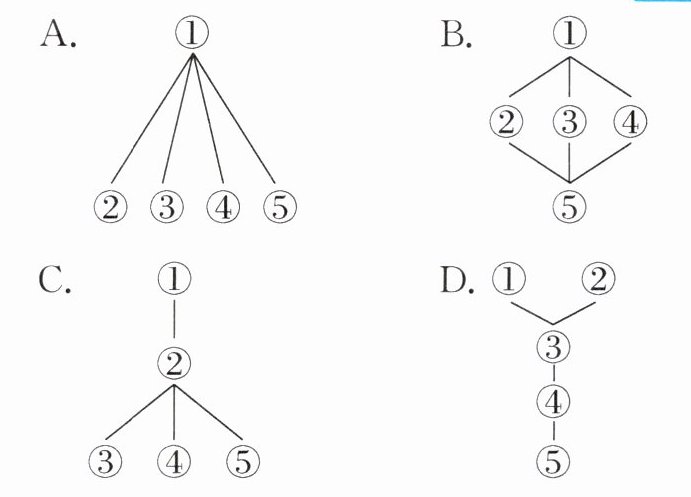
4. Which of the following can be the best title?
A. A Study About Friends
B. Snakes Like to Make Friends
C. Animals Are Our Good Friends
D. The Great Scientists
①Stories usually describe snakes as cold-hearted characters. However, a team of scientists doesn't believe that. They say that one type of snake makes close friends.
②The team of scientists wanted to see how garter snakes(束带蛇) communicate with each other. Especially, they wanted to know whether or not snakes make friends. The results turned out to be rather interesting.
③So, what did they do? Well, the team gathered 40 garter snakes. The scientists put groups of ten garter snakes in an enclosure(圈地). Inside the enclosure, there were rooms for the snakes to go inside. The team then watched how the snakes behaved(表现) towards each other. They formed groups. The experiment lasted eight days. Every day, the scientists removed(移开) the snakes from the enclosure. Then workers cleaned the space well. When the scientists put snakes back in a different structure, they then went straight back to the same groups again! The scientists believed this could show the garter snakes make friends. The team also said that they had noticed two types of snake personalities: shy and bold(大胆的). Shy snakes were reluctant(不情愿的) to come out of the rooms inside the enclosure. But bold snakes were happy to do that.
④The team of scientists believes that we shouldn't be surprised that snakes form friendship. “All animals, even snakes need to communicate with others,” said Morgan Skinner, one of the scientists in the experiment.
⑤It's not just snakes, though, that make friends. A recent scientific study found that dolphins do that too.
1. 语言能力推断能力 Why did the writer mention how stories describe snakes in the first paragraph?
A. To introduce a story.
B. To make a comparison(比较).
C. To show the background(背景).
D. To show the characters of snakes.
2. How did shy snakes behave in the experiment?
A. They wouldn't communicate with others.
B. They were afraid of meeting new friends.
C. They were afraid to go into the rooms.
D. They came to their friends after the space was cleaned.
3. 新考法篇章结构 What would be the best structure of the passage?
A.
B.
C.
D.
4. Which of the following can be the best title?
A. A Study About Friends
B. Snakes Like to Make Friends
C. Animals Are Our Good Friends
D. The Great Scientists
答案:
1-4 BDBB
查看更多完整答案,请扫码查看

