

 搜索
搜索
第113页
- 第4页
- 第5页
- 第6页
- 第7页
- 第8页
- 第9页
- 第10页
- 第11页
- 第12页
- 第13页
- 第14页
- 第15页
- 第16页
- 第17页
- 第18页
- 第19页
- 第20页
- 第21页
- 第22页
- 第23页
- 第24页
- 第25页
- 第26页
- 第27页
- 第28页
- 第29页
- 第30页
- 第31页
- 第32页
- 第33页
- 第34页
- 第35页
- 第36页
- 第37页
- 第38页
- 第39页
- 第40页
- 第41页
- 第42页
- 第43页
- 第44页
- 第45页
- 第46页
- 第47页
- 第48页
- 第49页
- 第50页
- 第51页
- 第52页
- 第53页
- 第54页
- 第55页
- 第56页
- 第57页
- 第58页
- 第59页
- 第60页
- 第61页
- 第62页
- 第63页
- 第64页
- 第65页
- 第66页
- 第67页
- 第68页
- 第69页
- 第70页
- 第71页
- 第72页
- 第73页
- 第74页
- 第75页
- 第76页
- 第77页
- 第78页
- 第79页
- 第80页
- 第81页
- 第82页
- 第83页
- 第84页
- 第85页
- 第86页
- 第87页
- 第88页
- 第89页
- 第90页
- 第91页
- 第92页
- 第93页
- 第94页
- 第95页
- 第96页
- 第97页
- 第98页
- 第99页
- 第100页
- 第101页
- 第102页
- 第103页
- 第104页
- 第105页
- 第106页
- 第107页
- 第108页
- 第109页
- 第110页
- 第111页
- 第112页
- 第113页
- 第114页
- 第115页
佳作赏析
[经典例题]
在春节,许多孩子都能收到来自长辈的压岁钱。我们该如何管理这些钱,把压岁钱用得更有意义呢?请结合要点提示写一篇英语短文。
内容包括:1. 你的压岁钱的来源和用途。
2. 对合理使用压岁钱的建议(至少三点)。
3. 呼吁大家管理好压岁钱。
要求:1. 文中不得透露个人真实姓名和学校名称。2. 语句连贯,词数80左右。
[高分范文]
① I get some lucky money from my parents at the Spring Festival every year.
I usually ② spend some money on books, school things, shoes and clothes. Sometimes I buy some presents for my parents.
To make good use of lucky money, I think we can do the following things. ③ First, we should save part of the money. We can’t buy everything we like. Second, we can buy some presents for our parents and teachers, so we can show our love to them. Last, we can use some money to help children in need. Helping others makes us happy.
④ Let’s manage our money well!
[名师点评]
本文先介绍了压岁钱的来源和用途,接着对合理使用压岁钱提出了自己的建议,最后呼吁大家管理好自己的压岁钱。
① 开门见山介绍了压岁钱的来源。
② 熟练运用 spend some money on、buy some presents for 等短语,介绍了作者是如何使用压岁钱的。
③ First、Second 和 Last 的运用使文章结构清楚,叙述自然流畅。
④ 用祈使句呼吁大家管理好压岁钱。
特训
素材积累
[开头句]
1. Every year, I get some lucky money at the Spring Festival.
2. Lucky money is a traditional present that children get at Chinese New Year.
[中间句]
1. It is good of you to say thanks to the person who gave it to you.
2. I try to manage my money well.
3. Some children may use some money to help children in need every year.
[结尾句]
1. It is good to save for a rainy day.
2. If we use lucky money in a good way, it will bring us joy and happiness.
[名言警句]
1. Money can’t buy friends.
金钱买不到朋友。
2. A wise person should have money in their head, but not in their heart.
一个聪明人应该知道如何利用钱,而不是老想着钱。
写作演练
[小试身手]
你们或多或少都有零用钱,但是你们思考过应该怎样理智地花费零用钱吗?请根据提示,以“How to spend your pocket money wisely”为题,给出你的合理建议。
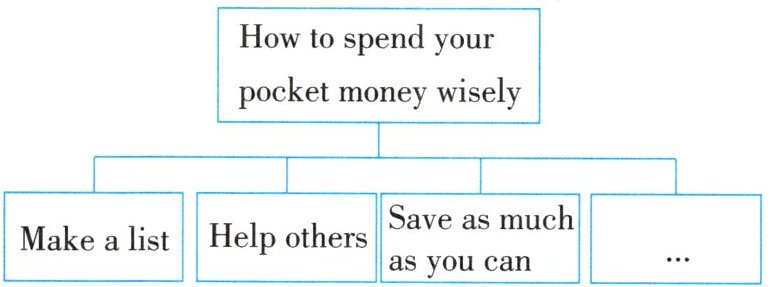
要求:1. 词数80左右,文中须包含上图提示的所有信息,可适当发挥。开头和结尾已给出,不计入总词数。2. 意思连贯,表达清楚。3. 文中不得透露个人真实姓名和学校名称。
[思路点拨]
① 时态:一般现在时。② 人称:第二人称。③ 根据图示信息依次给出你的具体建议。
[写作提纲]

[妙笔生花]
How to spend your pocket money wisely
You’re always happy to get some pocket money. But how can you spend it wisely? Here is some advice.
________
________
________
________
________
________
________
________
________
________
A piggy bank may be useful for you to save money. Someday when you look back, you’ll get a strong sense of achievement(成就) by saving so much money by yourself!
(更多精彩作文素材见“背记手册”)
特训


[经典例题]
在春节,许多孩子都能收到来自长辈的压岁钱。我们该如何管理这些钱,把压岁钱用得更有意义呢?请结合要点提示写一篇英语短文。
内容包括:1. 你的压岁钱的来源和用途。
2. 对合理使用压岁钱的建议(至少三点)。
3. 呼吁大家管理好压岁钱。
要求:1. 文中不得透露个人真实姓名和学校名称。2. 语句连贯,词数80左右。
[高分范文]
① I get some lucky money from my parents at the Spring Festival every year.
I usually ② spend some money on books, school things, shoes and clothes. Sometimes I buy some presents for my parents.
To make good use of lucky money, I think we can do the following things. ③ First, we should save part of the money. We can’t buy everything we like. Second, we can buy some presents for our parents and teachers, so we can show our love to them. Last, we can use some money to help children in need. Helping others makes us happy.
④ Let’s manage our money well!
[名师点评]
本文先介绍了压岁钱的来源和用途,接着对合理使用压岁钱提出了自己的建议,最后呼吁大家管理好自己的压岁钱。
① 开门见山介绍了压岁钱的来源。
② 熟练运用 spend some money on、buy some presents for 等短语,介绍了作者是如何使用压岁钱的。
③ First、Second 和 Last 的运用使文章结构清楚,叙述自然流畅。
④ 用祈使句呼吁大家管理好压岁钱。
特训
素材积累
[开头句]
1. Every year, I get some lucky money at the Spring Festival.
2. Lucky money is a traditional present that children get at Chinese New Year.
[中间句]
1. It is good of you to say thanks to the person who gave it to you.
2. I try to manage my money well.
3. Some children may use some money to help children in need every year.
[结尾句]
1. It is good to save for a rainy day.
2. If we use lucky money in a good way, it will bring us joy and happiness.
[名言警句]
1. Money can’t buy friends.
金钱买不到朋友。
2. A wise person should have money in their head, but not in their heart.
一个聪明人应该知道如何利用钱,而不是老想着钱。
写作演练
[小试身手]
你们或多或少都有零用钱,但是你们思考过应该怎样理智地花费零用钱吗?请根据提示,以“How to spend your pocket money wisely”为题,给出你的合理建议。
要求:1. 词数80左右,文中须包含上图提示的所有信息,可适当发挥。开头和结尾已给出,不计入总词数。2. 意思连贯,表达清楚。3. 文中不得透露个人真实姓名和学校名称。
[思路点拨]
① 时态:一般现在时。② 人称:第二人称。③ 根据图示信息依次给出你的具体建议。
[写作提纲]
[妙笔生花]
How to spend your pocket money wisely
You’re always happy to get some pocket money. But how can you spend it wisely? Here is some advice.
________
________
________
________
________
________
________
________
________
________
A piggy bank may be useful for you to save money. Someday when you look back, you’ll get a strong sense of achievement(成就) by saving so much money by yourself!
(更多精彩作文素材见“背记手册”)
特训
答案:
One possible version:
How to spend your pocket money wisely
You're always happy to get some pocket money. But how can you spend it wisely? Here is some advice.
First, make a list. When you get some pocket money, don't get too excited. Write down the things you really need and how much they will cost before you buy them.
Second, help others. We all know there are still many people in need of our help in the world. You can use your pocket money to do something useful and helpful for them.
Third, save as much as you can. If you spend all your pocket money soon, you won't have enough money when you really need it.
A piggy bank may be useful for you to save money. Someday when you look back, you'll get a strong sense of achievement by saving so much money by yourself!
How to spend your pocket money wisely
You're always happy to get some pocket money. But how can you spend it wisely? Here is some advice.
First, make a list. When you get some pocket money, don't get too excited. Write down the things you really need and how much they will cost before you buy them.
Second, help others. We all know there are still many people in need of our help in the world. You can use your pocket money to do something useful and helpful for them.
Third, save as much as you can. If you spend all your pocket money soon, you won't have enough money when you really need it.
A piggy bank may be useful for you to save money. Someday when you look back, you'll get a strong sense of achievement by saving so much money by yourself!
扫码即听
1. What does the boy want to save money for?
A.
B.
C.
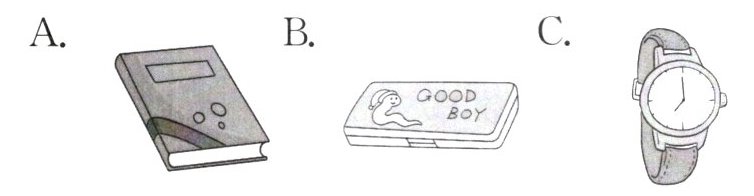
2. What does the boy plan to buy as a gift?
A.
B.
C.
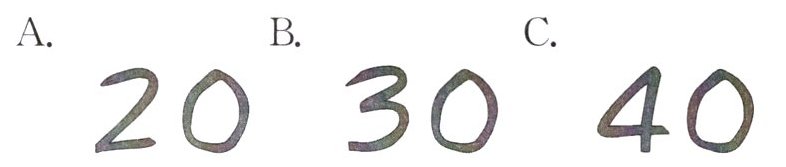
3. How much money does the girl get every week?
A. 20
B. 30
C. 40
4. Where does the girl keep her savings?
A.
B.
C.
5. What advice does the boy give about saving money?
A. Stoping buying snacks.
B. Spending less on clothes.
C. Writing down the expenses.
6. What is the girl saving money for?
A. A school trip.
B. A birthday party.
C. A new dress.
7. What does the boy think about borrowing money?
A. It’s helpful.
B. It’s risky.
C. It’s easy.
8. How does the girl earn her pocket money?
A. By helping at home.
B. By selling old books.
C. By tutoring her neighbour.
9. What is the boy’s advice about using pocket money?
A. Spending it on things we love.
B. Saving it for emergencies.
C. Using it all every week.
10. What is the girl’s biggest expense?
A. Snacks.
B. Clothes.
C. School supplies.
1. What does the boy want to save money for?
A.
B.
C.
2. What does the boy plan to buy as a gift?
A.
B.
C.
3. How much money does the girl get every week?
A. 20
B. 30
C. 40
4. Where does the girl keep her savings?
A.
B.
C.
5. What advice does the boy give about saving money?
A. Stoping buying snacks.
B. Spending less on clothes.
C. Writing down the expenses.
6. What is the girl saving money for?
A. A school trip.
B. A birthday party.
C. A new dress.
7. What does the boy think about borrowing money?
A. It’s helpful.
B. It’s risky.
C. It’s easy.
8. How does the girl earn her pocket money?
A. By helping at home.
B. By selling old books.
C. By tutoring her neighbour.
9. What is the boy’s advice about using pocket money?
A. Spending it on things we love.
B. Saving it for emergencies.
C. Using it all every week.
10. What is the girl’s biggest expense?
A. Snacks.
B. Clothes.
C. School supplies.
答案:
1. B 2. A 3. B 4. C 5. C 6. A 7. B 8. A 9. B 10. C
查看更多完整答案,请扫码查看

