

 搜索
搜索
()7. —What time is it?
—______ three o'clock.
A. It
B. Its
C. It's
—______ three o'clock.
A. It
B. Its
C. It's
答案:
C
Ⅱ. 给下列句子选择相符的图片。
()1. I go to a football class on Monday.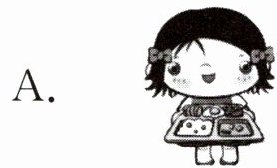
()2. It's time to have lunch.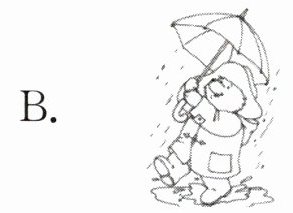
()3. We play sports in the afternoon.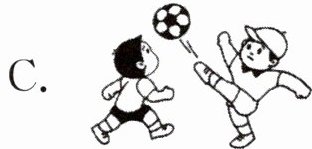
()4. Let's do volunteer work in the park.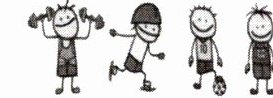
()5. It is going to be rainy tomorrow.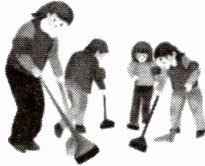
()1. I go to a football class on Monday.
()2. It's time to have lunch.
()3. We play sports in the afternoon.
()4. Let's do volunteer work in the park.
()5. It is going to be rainy tomorrow.
答案:
1. 句子“I go to a football class on Monday.”提到了足球课,图片C中有足球,与之相符。
2. 句子“It's time to have lunch.”说的是吃午饭的时间,图片A中有食物,可表示吃午饭,与之相符。
3. 句子“We play sports in the afternoon.”提到了做运动,图片D中孩子们在进行不同的运动项目,与之相符。
4. 句子“Let's do volunteer work in the park.”说的是在公园做志愿工作,图片E中人们在打扫卫生,属于志愿工作,与之相符。
5. 句子“It is going to be rainy tomorrow.”提到了下雨,图片B中有雨伞和雨滴,可表示下雨,与之相符。
1. C 2. A 3. D 4. E 5. B
2. 句子“It's time to have lunch.”说的是吃午饭的时间,图片A中有食物,可表示吃午饭,与之相符。
3. 句子“We play sports in the afternoon.”提到了做运动,图片D中孩子们在进行不同的运动项目,与之相符。
4. 句子“Let's do volunteer work in the park.”说的是在公园做志愿工作,图片E中人们在打扫卫生,属于志愿工作,与之相符。
5. 句子“It is going to be rainy tomorrow.”提到了下雨,图片B中有雨伞和雨滴,可表示下雨,与之相符。
1. C 2. A 3. D 4. E 5. B
Ⅲ. 按要求完成下列各题。
1. There are some girls in the room. (改为否定句)
______
2. Mike can do it like this. (改为祈使句)
______
3. Can he play football well? (改为肯定句)
______
4. There is one black rubber in my pencil-box. (对画线部分提问)
______
5. She can see two markers under the desk. (对画线部分提问)
______
1. There are some girls in the room. (改为否定句)
______
2. Mike can do it like this. (改为祈使句)
______
3. Can he play football well? (改为肯定句)
______
4. There is one black rubber in my pencil-box. (对画线部分提问)
______
5. She can see two markers under the desk. (对画线部分提问)
______
答案:
1. 含有 there be 句型的句子变否定句,在 be 动词后直接加 not,some 一般用于肯定句,否定句中要变为 any,所以 There are some girls in the room. 的否定句是 There aren't any girls in the room.
2. 含有情态动词 can 的句子变祈使句,直接去掉情态动词,以动词原形开头,所以 Mike can do it like this. 的祈使句是 Do it like this.
3. 含有情态动词 can 的一般疑问句变肯定句,把情态动词 can 放在主语后,其他部分照抄,所以 Can he play football well? 的肯定句是 He can play football well.
4. 对数量提问,且后面的名词是可数名词单数,用 How many...are there...? 句型,所以对 one 提问,句子是 How many black rubbers are there in your pencil - box?
5. 对数量提问,且后面的名词是可数名词复数,用 How many...can sb. see...? 句型,所以对 two 提问,句子是 How many markers can she see under the desk?
1. There aren't any girls in the room.
2. Do it like this.
3. He can play football well.
4. How many black rubbers are there in your pencil - box?
5. How many markers can she see under the desk?
2. 含有情态动词 can 的句子变祈使句,直接去掉情态动词,以动词原形开头,所以 Mike can do it like this. 的祈使句是 Do it like this.
3. 含有情态动词 can 的一般疑问句变肯定句,把情态动词 can 放在主语后,其他部分照抄,所以 Can he play football well? 的肯定句是 He can play football well.
4. 对数量提问,且后面的名词是可数名词单数,用 How many...are there...? 句型,所以对 one 提问,句子是 How many black rubbers are there in your pencil - box?
5. 对数量提问,且后面的名词是可数名词复数,用 How many...can sb. see...? 句型,所以对 two 提问,句子是 How many markers can she see under the desk?
1. There aren't any girls in the room.
2. Do it like this.
3. He can play football well.
4. How many black rubbers are there in your pencil - box?
5. How many markers can she see under the desk?
查看更多完整答案,请扫码查看

