

 搜索
搜索
第5页
- 第1页
- 第2页
- 第3页
- 第4页
- 第5页
- 第6页
- 第7页
- 第8页
- 第9页
- 第10页
- 第11页
- 第12页
- 第13页
- 第14页
- 第15页
- 第16页
- 第17页
- 第18页
- 第19页
- 第20页
- 第21页
- 第22页
- 第23页
- 第24页
- 第25页
- 第26页
- 第27页
- 第28页
- 第29页
- 第30页
- 第31页
- 第32页
- 第33页
- 第34页
- 第35页
- 第36页
- 第37页
- 第38页
- 第39页
- 第40页
- 第41页
- 第42页
- 第43页
- 第44页
- 第45页
- 第46页
- 第47页
- 第48页
- 第49页
- 第50页
- 第51页
- 第52页
- 第53页
- 第54页
- 第55页
- 第56页
- 第57页
- 第58页
- 第59页
- 第60页
- 第61页
- 第62页
- 第63页
- 第64页
- 第65页
- 第66页
- 第67页
- 第68页
- 第69页
- 第70页
- 第71页
- 第72页
- 第73页
- 第74页
- 第75页
- 第76页
- 第77页
一、听录音,根据所听内容,选择正确的答语。
()1. A. You're welcome. B. Sure. Here you are.
()2. A. This is a book. B. They're grapes.
()3. A. It's a duck. B. No problem.
()4. A. Yes, it is. B. Yes, I do.
()5. A. I can hear with my ears. B. Let's touch.
()1. A. You're welcome. B. Sure. Here you are.
()2. A. This is a book. B. They're grapes.
()3. A. It's a duck. B. No problem.
()4. A. Yes, it is. B. Yes, I do.
()5. A. I can hear with my ears. B. Let's touch.
答案:
1~5 BBABA
二、从方框中选择合适的选项,补全句子。
A. hear B. find C. make D. touch E. smell
1. I ______ with my nose. 2. I can ______ with my hands.
3. I can ______ the sound with my ears. 4. Mum, I can't ______ my eraser.
5. Let's ______ a kite.
A. hear B. find C. make D. touch E. smell
1. I ______ with my nose. 2. I can ______ with my hands.
3. I can ______ the sound with my ears. 4. Mum, I can't ______ my eraser.
5. Let's ______ a kite.
答案:
1~5 EDABC
()1. 跨学科 成语理解 In the words “盲人摸象”,the word “摸” means ______.
A. seeing
B. touching
C. smelling
A. seeing
B. touching
C. smelling
答案:
B
()2. We use the ______ to write.
A. ruler
B. book
C. pencil
A. ruler
B. book
C. pencil
答案:
C
()3. —______ Can I use your ruler? —Sure. Here you are.
A. Sorry.
B. No problem.
C. Excuse me.
A. Sorry.
B. No problem.
C. Excuse me.
答案:
C
解析根据“Can I use your ruler?”可知,此处用“Excuseme.”开头,用于有礼貌地寻求帮助。
易混辨析excuse me和sorry的用法:excuseme侧重于指并没有实际的错误,而是在打断对方、请求帮助时表达礼貌和歉意。
sorry侧重于指已经发生了实际的错误,或者是因为自己的行为给他人带来了不便或伤害而道歉。
解析根据“Can I use your ruler?”可知,此处用“Excuseme.”开头,用于有礼貌地寻求帮助。
易混辨析excuse me和sorry的用法:excuseme侧重于指并没有实际的错误,而是在打断对方、请求帮助时表达礼貌和歉意。
sorry侧重于指已经发生了实际的错误,或者是因为自己的行为给他人带来了不便或伤害而道歉。
()4. 实验班原创 文化意识 —______
—They're Binbin and Nini. They are the mascots of the 9th Asian Winter Games.
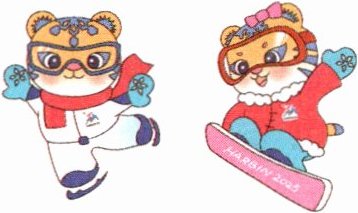 A. What's this? B. What are these? C. Is this a rabbit?
—They're Binbin and Nini. They are the mascots of the 9th Asian Winter Games.
A. What's this? B. What are these? C. Is this a rabbit?
答案:
B
解析 根据答语“它们是滨滨和妮妮。它们是第九届亚冬会的吉祥物”可知,问句询问的是“这些是什么”,用“What are these?”提问。
解析 根据答语“它们是滨滨和妮妮。它们是第九届亚冬会的吉祥物”可知,问句询问的是“这些是什么”,用“What are these?”提问。
四、新情境 分享学习经验 学校组织了与希望小学结对的“手拉手,交朋友”活动。乐乐在活动中认识了一些新朋友。从方框中选择合适的句子,补全对话。
A. What about you, Lele? B. Can I use your pen, Mike?
C. Here you are. D. What helps you learn, Mike?
A:Excuse me. I can't find my pen. 1. ______
B:No problem. 2. ______
A:Thank you. 3. ______
B:I see and hear in class and I can use pencils, books and computers to learn.
A:That's good!
B:4. ______
A:I read my books and I also see and hear in class.
A. What about you, Lele? B. Can I use your pen, Mike?
C. Here you are. D. What helps you learn, Mike?
A:Excuse me. I can't find my pen. 1. ______
B:No problem. 2. ______
A:Thank you. 3. ______
B:I see and hear in class and I can use pencils, books and computers to learn.
A:That's good!
B:4. ______
A:I read my books and I also see and hear in class.
答案:
1~4 BCDA
查看更多完整答案,请扫码查看

