

 搜索
搜索
2024年红对勾45分钟作业与单元评估九年级英语全一册冀教版
注:目前有些书本章节名称可能整理的还不是很完善,但都是按照顺序排列的,请同学们按照顺序仔细查找。练习册 2024年红对勾45分钟作业与单元评估九年级英语全一册冀教版 答案主要是用来给同学们做完题方便对答案用的,请勿直接抄袭。
第50页
- 第1页
- 第2页
- 第3页
- 第4页
- 第5页
- 第6页
- 第7页
- 第8页
- 第9页
- 第10页
- 第11页
- 第12页
- 第13页
- 第14页
- 第15页
- 第16页
- 第17页
- 第18页
- 第19页
- 第20页
- 第21页
- 第22页
- 第23页
- 第24页
- 第25页
- 第26页
- 第27页
- 第28页
- 第29页
- 第30页
- 第31页
- 第32页
- 第33页
- 第34页
- 第35页
- 第36页
- 第37页
- 第38页
- 第39页
- 第40页
- 第41页
- 第42页
- 第43页
- 第44页
- 第45页
- 第46页
- 第47页
- 第48页
- 第49页
- 第50页
- 第51页
- 第52页
- 第53页
- 第54页
- 第55页
- 第56页
- 第57页
- 第58页
- 第59页
- 第60页
- 第61页
- 第62页
- 第63页
- 第64页
- 第65页
- 第66页
- 第67页
- 第68页
- 第69页
- 第70页
- 第71页
- 第72页
- 第73页
- 第74页
- 第75页
- 第76页
- 第77页
- 第78页
- 第79页
- 第80页
- 第81页
- 第82页
- 第83页
- 第84页
- 第85页
- 第86页
- 第87页
- 第88页
- 第89页
- 第90页
- 第91页
- 第92页
- 第93页
- 第94页
- 第95页
- 第96页
- 第97页
- 第98页
- 第99页
- 第100页
- 第101页
- 第102页
- 第103页
- 第104页
- 第105页
- 第106页
- 第107页
- 第108页
- 第109页
- 第110页
- 第111页
- 第112页
- 第113页
- 第114页
- 第115页
- 第116页
- 第117页
- 第118页
- 第119页
- 第120页
- 第121页
- 第122页
- 第123页
- 第124页
- 第125页
- 第126页
- 第127页
- 第128页
- 第129页
- 第130页
- 第131页
- 第132页
Ⅱ. 阅读理解【主题:人与社会 古诗欣赏】
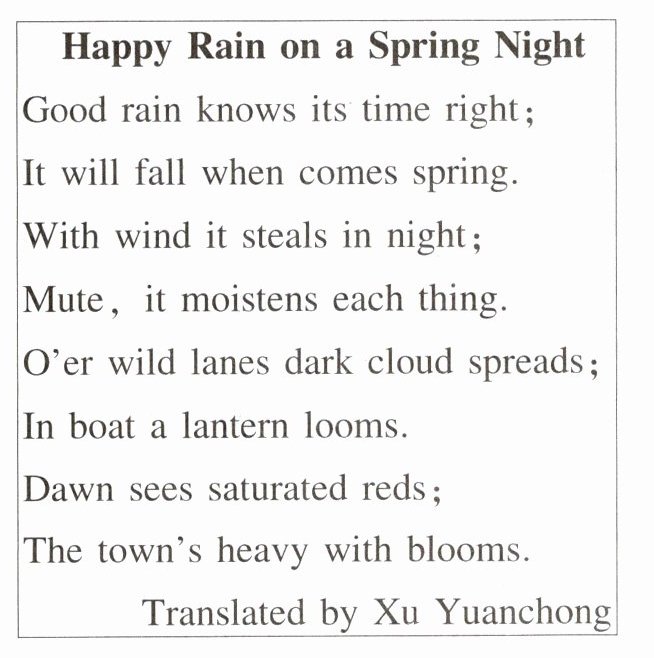
This famous poem, with four couplets, was written by Du Fu (712 - 770, Tang Dynasty) when he was living and farming in Chengdu. His farming experience taught him to be thankful to nature.
The very first word, "good", shows the poet's joy and love for the spring rain. The rain is good because it "knows" the proper time to come. Here the poet uses personification, as if the rains were smart enough to come in time for the farmers' busy season.
When the rain comes, it appears during the night without making any noise. Unlike the summer storms, the spring rain finishes its task without being known.
In the third couplet, the poet describes a peaceful scene to us. In the night sky, the clouds look dark and heavy. It's a sign that there will be enough rain during the night. The light from the riverboat makes the dark scene a bit livelier.
Lastly, the poet starts to imagine. Tomorrow morning, he thinks, the city of Chengdu will become beautiful when all of the flowers bloom after the rain.
1. What's the Chinese title of the poem Happy Rain on a Spring Night?
A. 《春望》
B. 《春夜喜雨》
C. 《夜雨寄北》
D. 《绝句》
(
2. Which of the following rhymes are right for this poem?
A. aa - bb - cc - dd
B. ab - ab - cd - cd
C. ab - cd - ab - cd
D. aa - bb - ab - cd
(
3. Which word can be used to describe the rain in this poem?
A. Busy.
B. Dark.
C. Quiet.
D. Heavy.
(
4. Which of the following uses personification?
A. With wind it steals in night.
B. It will fall when comes spring.
C. The town's heavy with blooms.
D. Mute, it moistens each thing.
(
5. What does Du Fu want to show in this poem?
A. He's thankful to nature.
B. He loves and enjoys farming.
C. He expects the flowers to bloom.
D. He loves the rainy days.
(
This famous poem, with four couplets, was written by Du Fu (712 - 770, Tang Dynasty) when he was living and farming in Chengdu. His farming experience taught him to be thankful to nature.
The very first word, "good", shows the poet's joy and love for the spring rain. The rain is good because it "knows" the proper time to come. Here the poet uses personification, as if the rains were smart enough to come in time for the farmers' busy season.
When the rain comes, it appears during the night without making any noise. Unlike the summer storms, the spring rain finishes its task without being known.
In the third couplet, the poet describes a peaceful scene to us. In the night sky, the clouds look dark and heavy. It's a sign that there will be enough rain during the night. The light from the riverboat makes the dark scene a bit livelier.
Lastly, the poet starts to imagine. Tomorrow morning, he thinks, the city of Chengdu will become beautiful when all of the flowers bloom after the rain.
1. What's the Chinese title of the poem Happy Rain on a Spring Night?
A. 《春望》
B. 《春夜喜雨》
C. 《夜雨寄北》
D. 《绝句》
(
B
)2. Which of the following rhymes are right for this poem?
A. aa - bb - cc - dd
B. ab - ab - cd - cd
C. ab - cd - ab - cd
D. aa - bb - ab - cd
(
B
)3. Which word can be used to describe the rain in this poem?
A. Busy.
B. Dark.
C. Quiet.
D. Heavy.
(
C
)4. Which of the following uses personification?
A. With wind it steals in night.
B. It will fall when comes spring.
C. The town's heavy with blooms.
D. Mute, it moistens each thing.
(
A
)5. What does Du Fu want to show in this poem?
A. He's thankful to nature.
B. He loves and enjoys farming.
C. He expects the flowers to bloom.
D. He loves the rainy days.
(
A
)
答案:
1. B 2. B 3. C 4. A 5. A
查看更多完整答案,请扫码查看

