

 搜索
搜索
第48页
- 第1页
- 第2页
- 第3页
- 第4页
- 第5页
- 第6页
- 第7页
- 第8页
- 第9页
- 第10页
- 第11页
- 第12页
- 第13页
- 第14页
- 第15页
- 第16页
- 第17页
- 第18页
- 第19页
- 第20页
- 第21页
- 第22页
- 第23页
- 第24页
- 第25页
- 第26页
- 第27页
- 第28页
- 第29页
- 第30页
- 第31页
- 第32页
- 第33页
- 第34页
- 第35页
- 第36页
- 第37页
- 第38页
- 第39页
- 第40页
- 第41页
- 第42页
- 第43页
- 第44页
- 第45页
- 第46页
- 第47页
- 第48页
- 第49页
- 第50页
- 第51页
- 第52页
- 第53页
- 第54页
- 第55页
- 第56页
- 第57页
- 第58页
- 第59页
- 第60页
- 第61页
- 第62页
- 第63页
- 第64页
- 第65页
- 第66页
- 第67页
- 第68页
- 第69页
- 第70页
- 第71页
- 第72页
- 第73页
- 第74页
- 第75页
- 第76页
- 第77页
- 第78页
- 第79页
- 第80页
- 第81页
- 第82页
- 第83页
- 第84页
- 第85页
- 第86页
- 第87页
- 第88页
- 第89页
- 第90页
- 第91页
- 第92页
- 第93页
- 第94页
- 第95页
- 第96页
- 第97页
- 第98页
- 第99页
- 第100页
- 第101页
- 第102页
- 第103页
- 第104页
- 第105页
- 第106页
- 第107页
- 第108页
- 第109页
- 第110页
- 第111页
- 第112页
- 第113页
- 第114页
- 第115页
- 第116页
- 第117页
- 第118页
一、完形
素养:思维品质 话题:分享建议
难度:中 建议用时:8分钟
Anansi the Wise
[2024江西中考改编]Some people think they know everything. Anansi the spider(蜘蛛) didn't think that. He was a 1_ spider. And he knew to have real wisdom(智慧), he had to learn more.
One day, Anansi found a(n) 2_ gourd(葫芦) on the ground and he had an idea. " 3_ I get advice from others and put it in this gourd, then I'll be wiser than anyone else in the world."
So, he went from house to house and asked the other creatures(生物), "What's your best piece of 4_?" And they were all happy to share their wisdom, because they could see that Anansi 5_ it.
The snail(蜗牛) said, "Don't be in a hurry. 6_ is not a 100 - meter race."
The butterfly said, "Life is short. Enjoy every day."
The ant said, "You'll 7_ be great on your own. Everyone needs the help of others."
Anansi was very happy with all this advice. He took it and put it in 8_ gourd. And when he'd 9_ the gourd, he thought to himself, "Now, I have more wisdom than anyone else. I must hide the wisdom, so no one can take it away." He 10_ and saw a hole high up in a tree, and he had an idea.
Anansi held the gourd in two legs and tried to 11_ the tree with his other six legs. But the gourd was too big and he couldn't climb. His son was nearby 12_ him. "Daddy," he said, "why don't you tie the gourd to your back and then climb the tree?" "That's very good advice," said Anansi. "Thank you for sharing it with me." And then Anansi realized that advice is only 13_ when we share it with someone.
So, he climbed the tree with the gourd on his back. And when Anansi reached the 14_, he held the gourd up to the wind. All the advice flew into the sky and traveled 15_ the land. And wisdom came to everyone.
1 A. quiet B. crazy C. poor D. clever
2 A. empty B. small C. soft D. broken
3 A. So B. If C. Before D. Until
4 A. news B. work C. advice D. wood
5 A. stood B. forgot C. missed D. needed
6 A. Action B. Sport C. Life D. Health
7 A. always B. often C. never D. usually
8 A. his B. her C. its D. their
9 A. found B. sold C. filled D. collected
10 A. got up B. showed up C. ran away D. looked around
11 A. hit B. climb C. pull D. shake
12 A. cheating B. raising C. warning D. helping
13 A. simple B. useful C. interesting D. real
14 A. top B. house C. ground D. mountain
15 A. across B. with C. into D. under
素养:思维品质 话题:分享建议
难度:中 建议用时:8分钟
Anansi the Wise
[2024江西中考改编]Some people think they know everything. Anansi the spider(蜘蛛) didn't think that. He was a 1_ spider. And he knew to have real wisdom(智慧), he had to learn more.
One day, Anansi found a(n) 2_ gourd(葫芦) on the ground and he had an idea. " 3_ I get advice from others and put it in this gourd, then I'll be wiser than anyone else in the world."
So, he went from house to house and asked the other creatures(生物), "What's your best piece of 4_?" And they were all happy to share their wisdom, because they could see that Anansi 5_ it.
The snail(蜗牛) said, "Don't be in a hurry. 6_ is not a 100 - meter race."
The butterfly said, "Life is short. Enjoy every day."
The ant said, "You'll 7_ be great on your own. Everyone needs the help of others."
Anansi was very happy with all this advice. He took it and put it in 8_ gourd. And when he'd 9_ the gourd, he thought to himself, "Now, I have more wisdom than anyone else. I must hide the wisdom, so no one can take it away." He 10_ and saw a hole high up in a tree, and he had an idea.
Anansi held the gourd in two legs and tried to 11_ the tree with his other six legs. But the gourd was too big and he couldn't climb. His son was nearby 12_ him. "Daddy," he said, "why don't you tie the gourd to your back and then climb the tree?" "That's very good advice," said Anansi. "Thank you for sharing it with me." And then Anansi realized that advice is only 13_ when we share it with someone.
So, he climbed the tree with the gourd on his back. And when Anansi reached the 14_, he held the gourd up to the wind. All the advice flew into the sky and traveled 15_ the land. And wisdom came to everyone.
1 A. quiet B. crazy C. poor D. clever
2 A. empty B. small C. soft D. broken
3 A. So B. If C. Before D. Until
4 A. news B. work C. advice D. wood
5 A. stood B. forgot C. missed D. needed
6 A. Action B. Sport C. Life D. Health
7 A. always B. often C. never D. usually
8 A. his B. her C. its D. their
9 A. found B. sold C. filled D. collected
10 A. got up B. showed up C. ran away D. looked around
11 A. hit B. climb C. pull D. shake
12 A. cheating B. raising C. warning D. helping
13 A. simple B. useful C. interesting D. real
14 A. top B. house C. ground D. mountain
15 A. across B. with C. into D. under
答案:
1. D 根据下文中的“And he knew to have real wisdom (智慧), he had to learn more”可知,蜘蛛知道要想拥有真正的智慧,它需要学更多东西,因此它很聪明,故用clever。
2. A 根据下文中的“I get advice from others and put it in this gourd”可知,蜘蛛决定从别人那里获取建议并将建议放到葫芦里,因此它发现的是一个空葫芦,故用empty。
3. B "I get advice from others and put it in this gourd"是"then I'll be wiser than anyone else in the world"的条件,所以此处应用If,引导条件状语从句。
4. C 根据上文中的"I get advice from others"可知,蜘蛛挨家挨户询问建议。故选C。
5. D 蜘蛛挨家挨户询问建议,其他生物很高兴地分享它们的智慧,因为它们明白蜘蛛很需要这些建议,故用needed。
6. C 根据下文中蝴蝶和蚂蚁的话可知,它们给出的是关于人生的建议,故此处蜗牛说的是"生活不是百米赛跑",故用Life。
7. C 根据下文中的"Everyone needs the help of others"可知,人只靠自己永远不会很出色,每个人都需要他人的帮助,故用never。
8. A 根据上下文可知,蜘蛛把建议放进葫芦里。主语是He,对应的形容词性物主代词为his。
9. C 根据上文提及蜘蛛把建议放进葫芦里,以及下文中的"Now, I have more wisdom than anyone else"可推知,蜘蛛把装智慧的葫芦装满了,故用filled。
10. D 根据空后的"saw a hole high up in a tree"可知,它环顾四周,发现一棵树的高处有一个洞,故look around "环顾四周"符合语境。
11. B 根据下文中的"But the gourd was too big and he couldn't climb"可知,蜘蛛用两条腿抱着葫芦,努力用其余六条腿爬上那棵树,故用climb。
12. D 根据下文蜘蛛儿子建议蜘蛛把葫芦背到背上可推知,它在附近帮助它爸爸。
13. B 根据上下文可知,蜘蛛意识到建议只有与人分享时才有用,故用useful。
14. A 根据空后的"he held the gourd up to the wind. All the advice flew into the sky"及常识可知,蜘蛛应该是爬到了树顶,故用top。
15. A 根据下文中的"And wisdom came to everyone"可知,智慧到达这片土地的各个角落,故across"遍及"符合文意。
2. A 根据下文中的“I get advice from others and put it in this gourd”可知,蜘蛛决定从别人那里获取建议并将建议放到葫芦里,因此它发现的是一个空葫芦,故用empty。
3. B "I get advice from others and put it in this gourd"是"then I'll be wiser than anyone else in the world"的条件,所以此处应用If,引导条件状语从句。
4. C 根据上文中的"I get advice from others"可知,蜘蛛挨家挨户询问建议。故选C。
5. D 蜘蛛挨家挨户询问建议,其他生物很高兴地分享它们的智慧,因为它们明白蜘蛛很需要这些建议,故用needed。
6. C 根据下文中蝴蝶和蚂蚁的话可知,它们给出的是关于人生的建议,故此处蜗牛说的是"生活不是百米赛跑",故用Life。
7. C 根据下文中的"Everyone needs the help of others"可知,人只靠自己永远不会很出色,每个人都需要他人的帮助,故用never。
8. A 根据上下文可知,蜘蛛把建议放进葫芦里。主语是He,对应的形容词性物主代词为his。
9. C 根据上文提及蜘蛛把建议放进葫芦里,以及下文中的"Now, I have more wisdom than anyone else"可推知,蜘蛛把装智慧的葫芦装满了,故用filled。
10. D 根据空后的"saw a hole high up in a tree"可知,它环顾四周,发现一棵树的高处有一个洞,故look around "环顾四周"符合语境。
11. B 根据下文中的"But the gourd was too big and he couldn't climb"可知,蜘蛛用两条腿抱着葫芦,努力用其余六条腿爬上那棵树,故用climb。
12. D 根据下文蜘蛛儿子建议蜘蛛把葫芦背到背上可推知,它在附近帮助它爸爸。
13. B 根据上下文可知,蜘蛛意识到建议只有与人分享时才有用,故用useful。
14. A 根据空后的"he held the gourd up to the wind. All the advice flew into the sky"及常识可知,蜘蛛应该是爬到了树顶,故用top。
15. A 根据下文中的"And wisdom came to everyone"可知,智慧到达这片土地的各个角落,故across"遍及"符合文意。
二、阅读理解
素养:学习能力 话题:科普知识
难度:难 建议用时:8分钟
[时文阅读][2024广东中考改编]People know animals do have feelings, but they are not sure if these feelings are correctly understood. In recent years, scientists have done research on the feelings of cows, frogs and pandas. ▲ It says that humans can tell whether a chicken is happy or sad by listening to its calls.
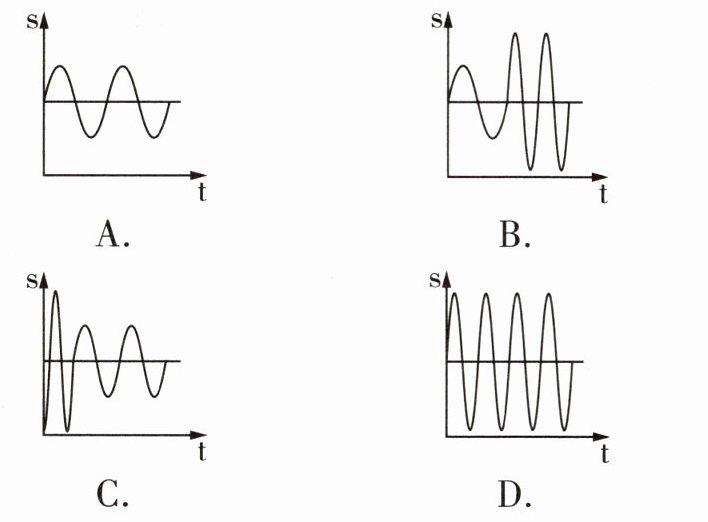
The researchers put a bowl (碗) behind a door. Inside the bowl, sometimes, there was something chickens love to eat, such as rice or insects. Sometimes, there was nothing. When the chickens saw food behind the door, they seemed happy and produced(产生) fast and loud sounds, known as food calls. When there wasn't food, the chickens made low and long noises to show disappointment(失望). The researchers recorded all these sounds and studied the waves.
Then the researchers chose 16 recordings of such chicken noises. Half were from the chickens seeing the food and half were from the chickens finding no food. They played these recordings to 194 volunteers. Sixty - nine percent of the volunteers correctly understood whether the chickens were feeling happy or not, and some of them even had no experience of taking care of chickens.
The result shows that humans have the natural ability to understand the feelings of chickens. Hopefully, this finding can bring about new technology to help with chicken - raising.
1 [新考法·信息还原题]Which of the following can be put in " ▲ " in Paragraph 1?
A. Humans may not like animals.
B. Scientists know nothing about it.
C. Nobody knows why this happens.
D. A new study adds chickens to the list.
2 [新考法·图文转换题]Which of the following is most probably the sound wave of a happy call by a chicken?
3 How did the volunteers help with the research?
A. By listening to the chicken calls.
B. By taking care of the chickens.
C. By finding food for the chickens.
D. By making the chickens happy.
4 What is the best title for the passage?
A. Chickens' Food Calls
B. Happy Chickens, Sad Chickens
C. Farmers' Best Choice
D. Smart Farmers, Healthy Farmers
素养:学习能力 话题:科普知识
难度:难 建议用时:8分钟
[时文阅读][2024广东中考改编]People know animals do have feelings, but they are not sure if these feelings are correctly understood. In recent years, scientists have done research on the feelings of cows, frogs and pandas. ▲ It says that humans can tell whether a chicken is happy or sad by listening to its calls.
The researchers put a bowl (碗) behind a door. Inside the bowl, sometimes, there was something chickens love to eat, such as rice or insects. Sometimes, there was nothing. When the chickens saw food behind the door, they seemed happy and produced(产生) fast and loud sounds, known as food calls. When there wasn't food, the chickens made low and long noises to show disappointment(失望). The researchers recorded all these sounds and studied the waves.
Then the researchers chose 16 recordings of such chicken noises. Half were from the chickens seeing the food and half were from the chickens finding no food. They played these recordings to 194 volunteers. Sixty - nine percent of the volunteers correctly understood whether the chickens were feeling happy or not, and some of them even had no experience of taking care of chickens.
The result shows that humans have the natural ability to understand the feelings of chickens. Hopefully, this finding can bring about new technology to help with chicken - raising.
1 [新考法·信息还原题]Which of the following can be put in " ▲ " in Paragraph 1?
A. Humans may not like animals.
B. Scientists know nothing about it.
C. Nobody knows why this happens.
D. A new study adds chickens to the list.
2 [新考法·图文转换题]Which of the following is most probably the sound wave of a happy call by a chicken?
3 How did the volunteers help with the research?
A. By listening to the chicken calls.
B. By taking care of the chickens.
C. By finding food for the chickens.
D. By making the chickens happy.
4 What is the best title for the passage?
A. Chickens' Food Calls
B. Happy Chickens, Sad Chickens
C. Farmers' Best Choice
D. Smart Farmers, Healthy Farmers
答案:
1. D 信息还原题。设空前提到,近年来,科学家们研究了牛、青蛙和大熊猫的情绪;设空后提到,它表明人类能通过听鸡叫声来判断鸡是开心还是难过。再结合备选项可知,设空处的内容与鸡的研究有关,故D项"一项新研究把鸡加入了名单"符合文意。
2. D
3. A 细节理解题。根据第三段中的"They played these recordings to 194 volunteers"可知,研究人员将鸡叫声的录音播放给194名志愿者听,即志愿者通过听鸡叫声来协助这项研究。故选A。
4. B 标题归纳题。本文主要介绍了一项关于鸡的情绪的研究。研究结果表明:鸡的叫声能反映鸡的情绪,而人类能够根据鸡的叫声来判断鸡的情绪。由此可推知,B项"开心的鸡,伤心的鸡"最适合作本文的标题。
2. D
3. A 细节理解题。根据第三段中的"They played these recordings to 194 volunteers"可知,研究人员将鸡叫声的录音播放给194名志愿者听,即志愿者通过听鸡叫声来协助这项研究。故选A。
4. B 标题归纳题。本文主要介绍了一项关于鸡的情绪的研究。研究结果表明:鸡的叫声能反映鸡的情绪,而人类能够根据鸡的叫声来判断鸡的情绪。由此可推知,B项"开心的鸡,伤心的鸡"最适合作本文的标题。
查看更多完整答案,请扫码查看

